Automatic Drop Seals
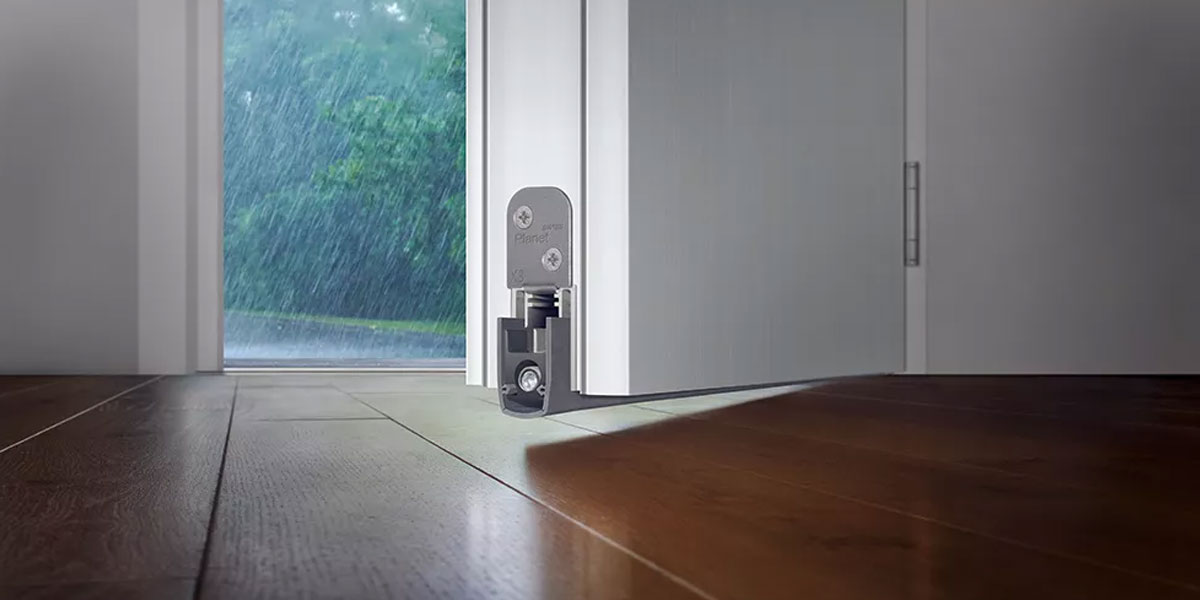
Automatic drop seals are engineered devices mounted on the bottom of hinged doors that automatically deploy when the door is closed, creating a seal against the floor or threshold, and retract when it’s opened. This mechanism helps to close the often overlooked bottom gap, improving acoustic performance, smoke and fire containment, energy efficiency, and environmental separation. They are especially useful in commercial and institutional settings where regulation or client expectations demand sound privacy, safety, or clean separation between spaces (offices, hotels, healthcare, education etc.).
For architects and builders, specifying automatic drop seals means better overall building performance: fewer acoustic leaks, improved fire/smoke barrier integrity, lower energy losses through drafts, and enhanced comfort & hygiene. Properly selected and installed, they integrate with door sets without compromising operation, aesthetics or maintenance. They help ensure compliance with building codes related to fire / smoke safety, acoustic protection, accessibility and energy conservation, and reduce risk of post‐installation remedial work.

Assessment & Advice

Coordinated Specification

Compliance & Standards

Documentation Support
Our Drop Seal Solutions
-
Advice & selection of automatic drop seals to suit door type (solid, glazed, timber), floor/threshold condition, and gap tolerances.
-
Testing data analysis: acoustic ratings (e.g. Rw or dB values), fire/smoke certification where necessary, durability & cycle life.
-
Slip, wear, friction, clearance considerations: ensuring the drop seal does not create impediments or trip hazards and works smoothly.
-
Options for face‐fixed, semi‐mortised or fully mortised installation to balance aesthetics vs performance.
-
Compatibility with threshold plates or finishes to enhance seal performance, especially on uneven floors or mixed flooring types.
-
Integration with hardware schedules / door sets / fire doors: ensuring perimeter seals, intumescent strips, hinges, closers are coordinated so the full door assembly meets required standards.
-
Guidance on regulatory compliance: e.g. Approved Document E (UK), Building Regulations for fire (Part B), smoke and accessibility (Part M), acoustics, and any relevant local codes.
-
Specification documentation: datasheets, technical drawings, schedule entries, details of test certificates or reports to include in contracts.
-
On‐site / construction phase review: ensuring installation is within tolerances; the drop seal is adjusted properly; threshold surfaces level; sealing surfaces clean; maintenance access accounted for.
-
Considerations of long-term use & maintenance: materials & finishes (rubber/silicone gaskets, spring mechanisms), user wear, cleaning, potential replacement parts.
Get in touch:
For more information on the Doorways Architectural Solutions range of architectural ironmongery and the services we can provide, please contact us using the button below.